
Types of Ocular Allergy
When you have an ocular allergy or another type of eye disease, your eye care professional will diagnose it based on your symptoms, personal medical history and family medical history.1 An accurate medical history is important in identifying the cause of your allergy or condition.1
Seasonal allergic conjunctivitis and perennial allergic conjunctivitis (SAC and PAC)
SAC is mainly triggered by sensitivity to pollen.2 PAC can be triggered by dust mites or other year-round allergens.2
SAC:2 SAC is the most common allergic disease of the eye. It’s also called hay fever conjunctivitis. It’s caused by pollen exposure, and its symptoms occur during high-pollen seasons. Common symptoms include itchy, red, swollen and watery eyes. These symptoms typically affect both eyes. SAC can be treated with antihistamine medication.
PAC: PAC symptoms are similar to SAC symptoms but tend to be milder.2,3 It’s caused by exposure to year-round allergens like house dust mites, animal dander and fungal spores.3 PAC is also often connected to dry eye.2 Treatment typically includes preservative-free eye drops and short-term antihistamine therapy.2
Vernal keratoconjunctivitis and atopic keratoconjunctivitis (VKC and AKC)
Shutterstock. ID: 336490448.
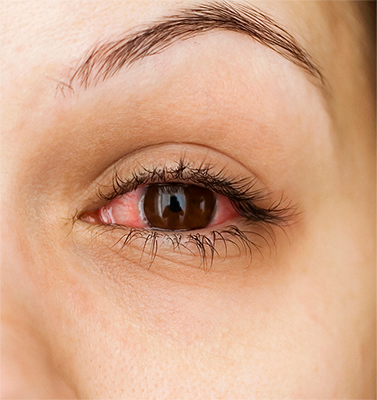
VKC: VKC is a relatively rare chronic ocular allergy that mainly affects children and young adults (usually boys and young men).2 It’s more common in warm, dry and windy climates and reoccurs seasonally.4 We don’t know the exact cause of VKC, but it usually arises from a combination of climate and allergen exposure.3 VKC is a serious inflammatory disease that can potentially cause visual complications.2,4
The main symptoms of VKC are intense itching and light sensitivity.2 Other symptoms include redness, eyelid swelling and discharge.2
Treatment of VKC is based on how often the symptoms occur, how long they last and how serious they are.3 For mild to moderate cases, eye drops and antihistamines are effective.4 For more severe cases, topical steroids or antibiotics may be necessary.3,4 It’s also important for patients to avoid triggers like sun, wind and salt water whenever possible.4
AKC: AKC is a serious, often chronic eye disease that typically involves eczema on the face and eyelids.2 Like VKC, it’s more common in boys and men.2 Patients are usually multiallergic, meaning they are allergic to multiple common environmental allergens.2 The exact cause of AKC is unknown, but it’s believed to occur due to a combination of allergen exposure, dermatitis and a genetic predisposition.3 Serious AKC is often combined with dry eye.2
AKC is typically treated with steroids, and a new product called tacrolimus has also been shown to be useful in treating the condition.2 Treatment includes eyelid care, usually with a mild steroid ointment or tacrolimus ointment.2 More serious cases may require topical antibiotics.3
Giant papillary conjunctivitis (GPC)
GPC is an inflammatory eye condition caused by a foreign body reaction to contact lens wear, post-surgical stitches or prosthetics in the eye.2 It’s not an allergic reaction to the foreign bodies themselves – rather, the foreign bodies can either harbour allergens on their surface or cause tiny injuries to the eye, allowing allergens to enter.3 Symptoms include itching, redness, discharge and sometimes light sensitivity.2
Treatment for GPC may include eye drops and antihistamines.3 Contact lens use should be stopped until the condition calms down, or otherwise stopped altogether.2
Types of Ocular Allergy: Summary2-4
| Name | Causes | Symptoms | Treatment |
|---|---|---|---|
| Seasonal allergic conjunctivitis (SAC) | Seasonal allergens, e.g., pollen |
|
Antihistamines |
| Perennial allergic conjunctivitis (PAC) | Year-round allergens, e.g., dust mites, pet dander, fungal spores |
|
Preservative-free eye drops, antihistamines |
| Vernal atopic keratoconjunctivitis (VKC) | Combined climate and allergen exposure |
|
Eye drops, antihistamines, topical steroids |
| Atopic keratoconjunctivitis (AKC) | Allergen exposure, dermatitis, genetic predisposition | Eczema on the face and eyelids | Steroid ointment, tacrolimus ointment |
| Giant papillary conjunctivitis (GPC) | Foreign objects that allow allergens to enter the eye |
|
Eye drops, antihistamines |

Do I have ocular allergy?

Living with ocular allergy

Tips & resources

Patient stories

Allergy booklet

Home
Do I have ocular allergy?
Tips & resources
Allergy booklet
Living with ocular allergy
Patient stories
Home
Terms of Use
Privacy Policy
Sitemap
