
Shutterstock. ID: 261165245.
Common Types of Ocular Infections
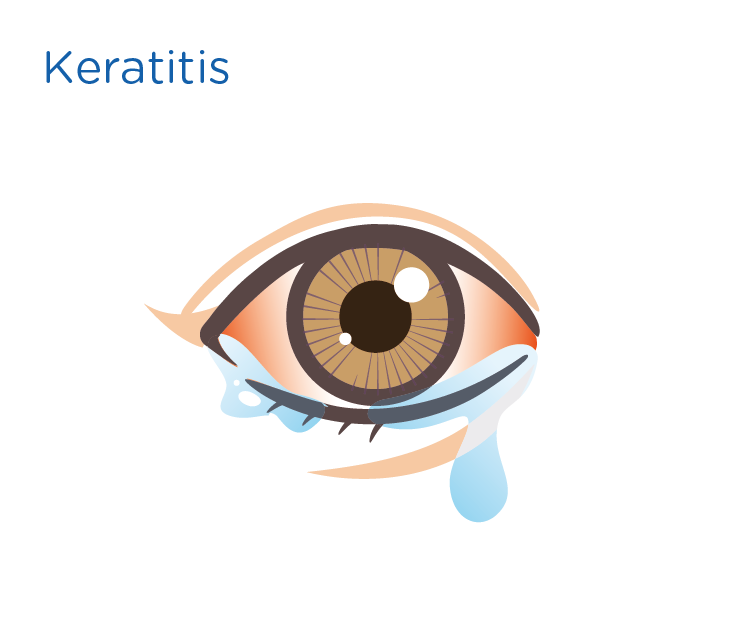
Keratitis is the inflammation (swelling) of the cornea, the clear outer covering of your eye.1
Infectious keratitis can be caused by bacteria, viruses, fungi or parasites invading the cornea.1,2 Non-infectious keratitis is less common2 and is usually caused by an eye injury or by a foreign body in your eye.1
The symptoms of keratitis include:1
- Eye pain
- Redness
- Watering eyes
- Blurred vision
- Sensitivity to light
Infectious keratitis can be treated with antibiotic, antiviral or antifungal eye drops, depending on the cause.1
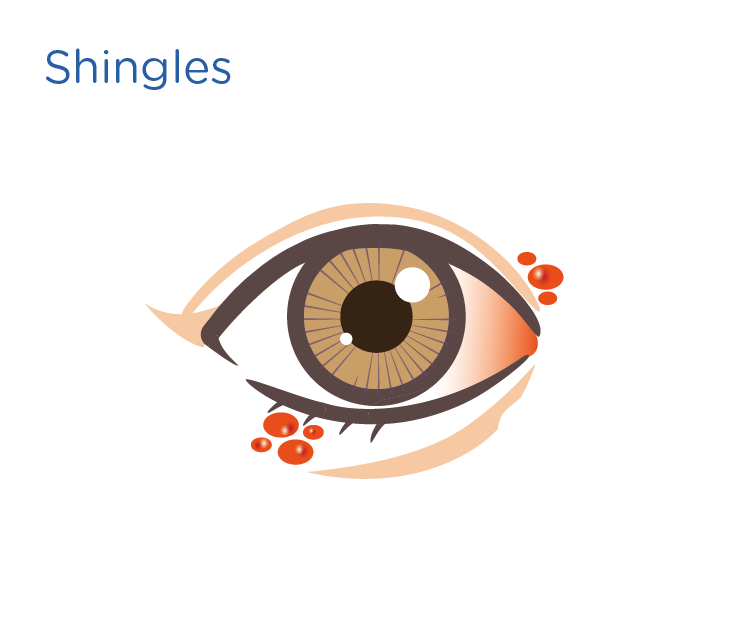
Shingles is a condition caused by the same virus that causes chickenpox.3 If you’ve had chickenpox at any point in your life, this virus lives in your body3 and it might ‘wake up’ later in your life, causing unpleasant symptoms.3
Common symptoms of shingles include fatigue, headaches and painful rashes.3 A shingles rash might start off with itching, burning or tingling sensations and then develop into blisters.3
Shingles can infect specific parts of your body, including your eyes.3,4 It can cause inflammation in your cornea, seriously damaging your eyes, so it’s important to see an ophthalmologist right away.3,4
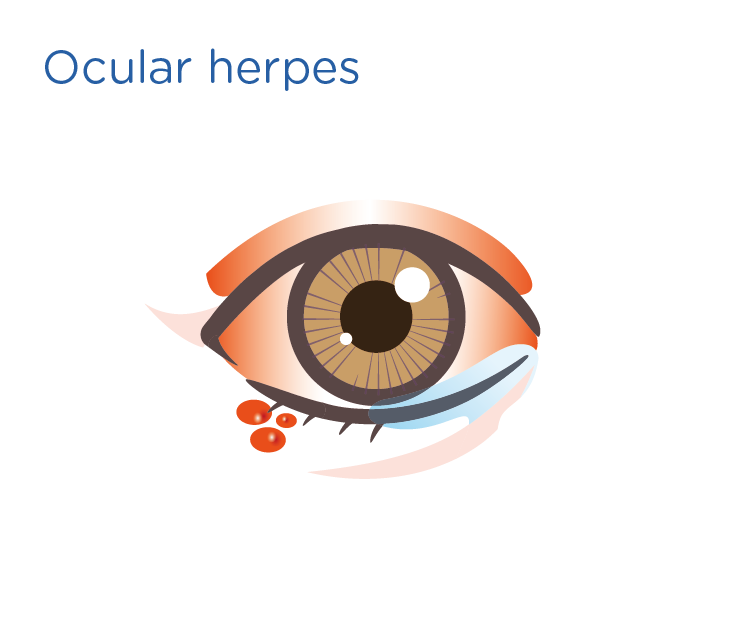
A lot of people carry the herpes simplex virus in their system.5 Usually it doesn’t cause problems, but sometimes it can flare up and cause issues like cold sores or eye infections.5
A herpes simplex eye infection usually affects the top layer of the cornea, causing redness and swelling.5 It can also cause light sensitivity, watery eyes and blurry vision.5 If the infection becomes more serious and spreads deeper into the middle and inner layers of your cornea, it can damage your eyesight.5
There is no cure for ocular herpes, but taking antiviral medication can keep it under control.5
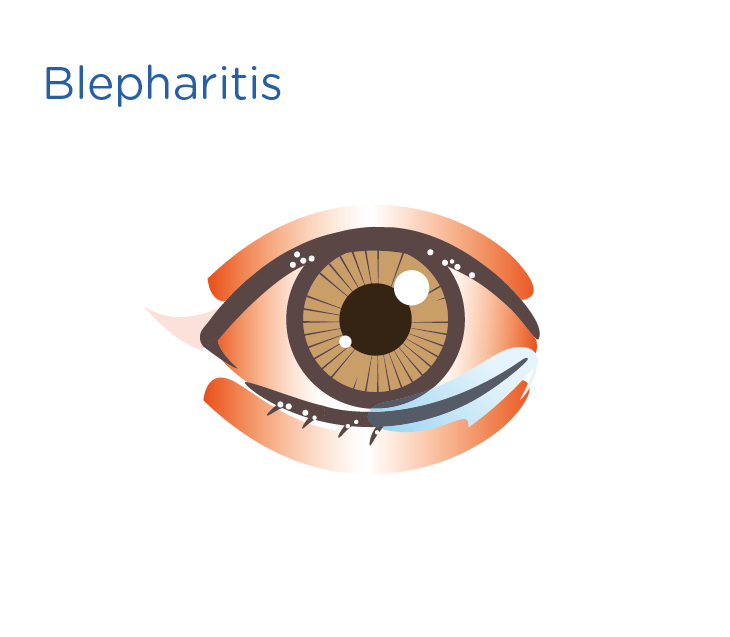
Blepharitis is a condition that affects your eyelids.6 It can be caused by bacteria or by a skin condition like dandruff.6
Common symptoms of blepharitis include:6
- Red, swollen eyelids
- Itching, irritation and burning
- Teary (watery) eyes
- Crusty eyelids
- Dandruff-like flakes on the eyelashes
More severe symptoms include blurry vision, missing eyelashes and swelling in other parts of the eye like the cornea.6
There are two types of blepharitis:6
- Anterior blepharitis affects the outside front edge of your eyelids (the place where your eyelashes are attached).6 It’s usually caused by a build-up of bacteria found on the face and eyelids.6 It can also be caused by allergies or a mite infestation in your eyelashes.6
- Posterior blepharitis affects the inner edge of your eyelid (the part that touches your eyeball).6 It usually happens when the glands of your eyelids produce too much oil, causing bacteria to grow.6 It can also develop because of other skin conditions like dandruff.6
The treatment for blepharitis depends on what type you have.6 You might need to use a gentle eye wash or ointment to keep your eyelids clean and free of crusts.6 You may also need to take antibiotic medication.6
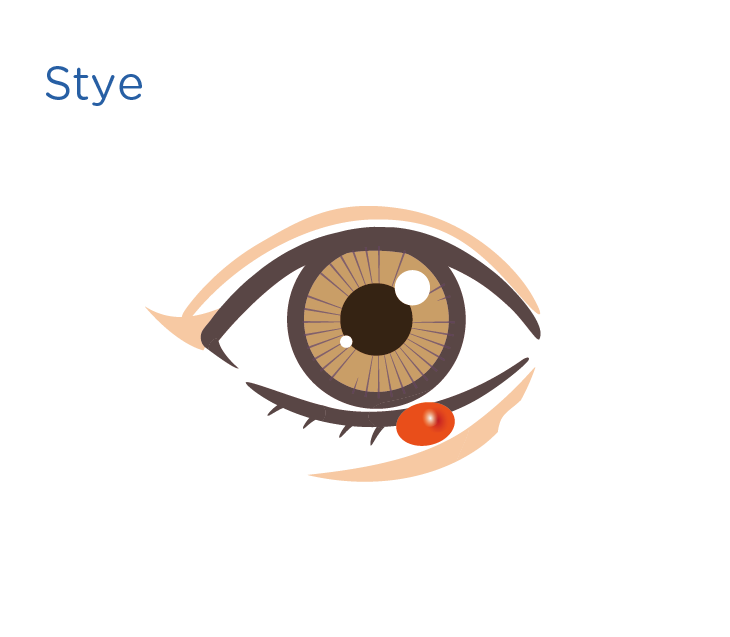
A stye, or hordeolum,7,8 is a small abscess (painful red lump) that grows from the base of your eyelashes or under your eyelid.7,8 Sometimes it can make your whole eyelid swollen and red.8
Styes are often painful or tender to touch8 and most are caused by a bacterial infection.8 You can also get a stye if you have blepharitis.8
There are two kinds of styes:8
- An external hordeolum is a stye that begins at the roots of your eyelashes.8 It usually happens because of an infection in the lash hair follicle.8
- An internal hordeolum is a stye inside your eyelid, usually caused by an infection in an oil gland in the lid.8
You can treat both types of styes using topical antibiotics.9 You can also use warm compresses on your eyelid to help drain the stye.9
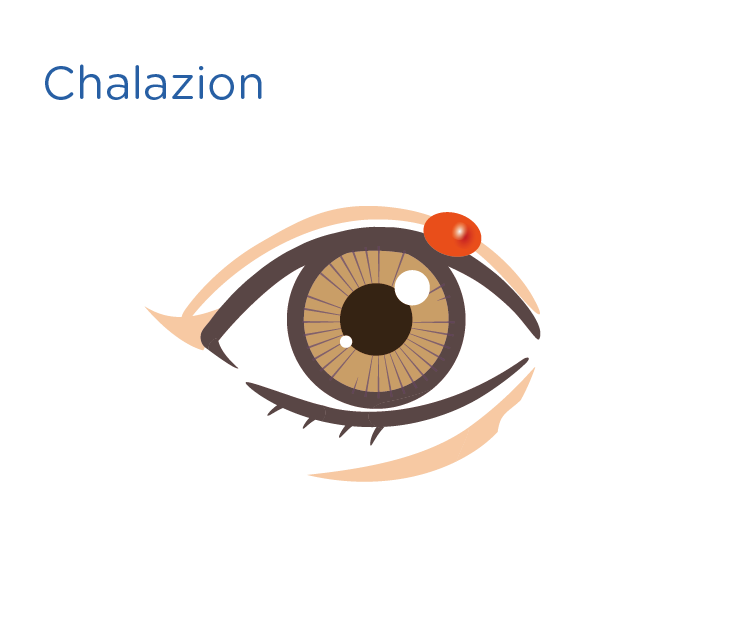
A chalazion is a swollen bump that grows on your eyelid, caused by a clogged oil gland.7,8 It might happen as an after-effect of a stye.7
Unlike a stye, a chalazion doesn’t involve an active bacterial infection.7 Chalazia are less painful than styes8 and they usually don’t make the whole eyelid swell.8
A chalazion can be treated by using warm compresses and a gentle eyelid wash that will clear away any discharge, pus and crusts.9
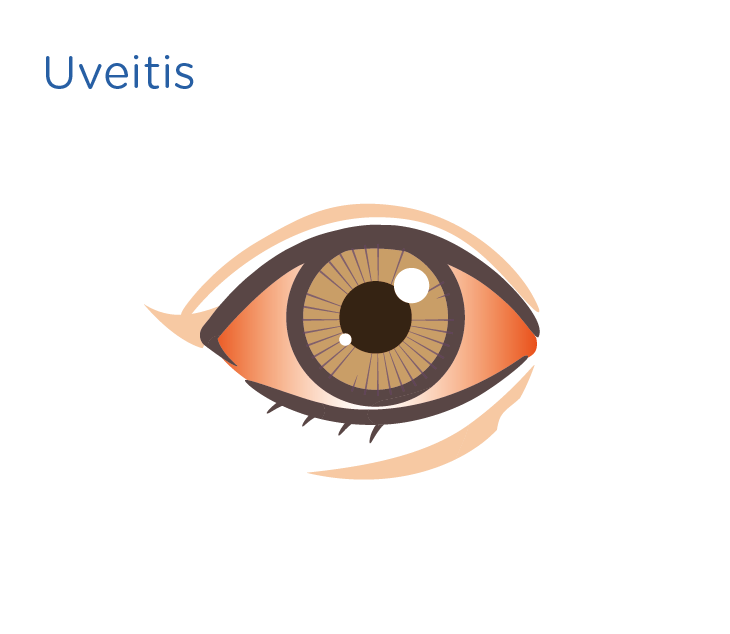
Uveitis is a group of diseases that affect the uvea, the layer and structures underneath the white part of your eye.10,11 Uveitis can also affect other areas of your eye.10
Uveitis can be caused by an infection, an eye injury or an inflammatory disease.12 It can affect one or both eyes and symptoms include:10,12
- Blurry vision
- Eye pain
- Redness
- Floaters (dark floating spots) in your vision
- Sensitivity to light
There are four different types of uveitis, which affect different parts of the uvea:10,13
- Anterior uveitis affects the front of your eye, causing inflammation in the iris.10,13 It is the most common type of uveitis.10
- Intermediate uveitis affects the ciliary body.13
- Posterior uveitis affects the back of your eye (the retina and choroid).10,13
- Panuveitis affects all layers of the uvea.13
Any type of uveitis can potentially lead to blindness and must be treated by an ophthalmologist.12 The treatment will depend on the type of uveitis you have, what caused it and how severe it is.12
Adapted from Shutterstock. ID: 1464637109.
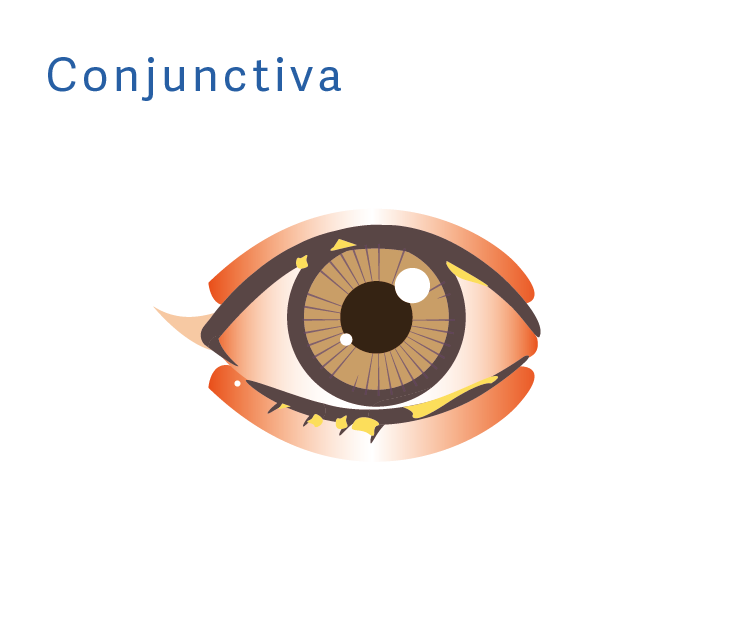
Conjunctivitis affects the conjunctiva, the thin lining that covers the whites of your eyes and the insides of your eyelids.14 The condition is often called ‘pink eye’.15
Conjunctivitis can be caused by bacteria, viruses, allergies or irritations in the eye.14,15 Symptoms include:15
- Redness
- Itching or burning
- Eye pain
- A gritty sensation in the eyes
- Watery eyes
- Puffy eyelids
- Blurry vision
- Sensitivity to light
- Mucous, pus or discharge that makes your eyelashes stick together
There are three main types of pink eye.15
- Viral conjunctivitis is the most common type of pink eye, caused by the same virus that causes common cold symptoms.15 It’s very contagious, meaning it can spread to other people easily.15
- Bacterial conjunctivitis is caused by a bacterial infection.15 It can also be very contagious.15
- Allergic conjunctivitis is caused by an allergic reaction to a substance like pollen, smoke or swimming pool chemicals.15 It is not contagious.15
Treatment may include eye drops, depending on what type of pink eye you have and how serious it is.15
View this summary as a quick guide to these common ocular infections.

Ocular infection

Do I have an ocular infection?

Common types of ocular infection

Treating ocular infections

Managing ocular infections

Resources for ocular infections

Home
Ocular infection
Common types of ocular infection
Managing ocular infections
Home
Do I have an ocular infection?
Treating ocular infections
Resources for ocular infections
Terms of Use
Privacy Policy
Sitemap
